
A Nanocomposite That Does More Than Protect
Nanotechnology gives Kevlar strain monitoring, electromagnetic interference shielding, and even ice removal.

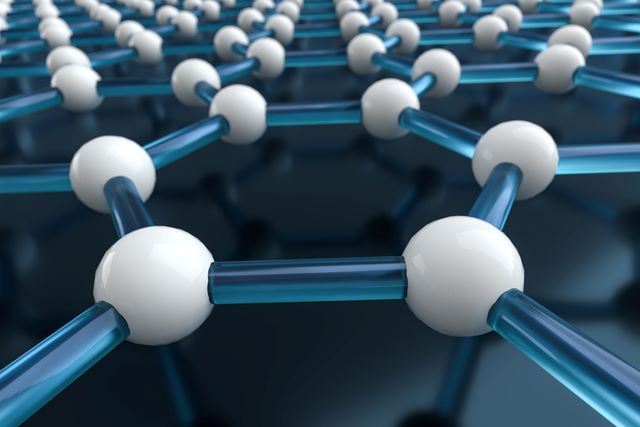
Nanomaterial researchers have demonstrated a new multifunctional Kevlar-based composite capable of sensing strain, shielding electronics from electromagnetic interference, and actively generating heat to remove ice.
While the technology remains at the research stage, it highlights a growing trend that is reshaping the future of advanced polymer materials as manufacturers are increasingly searching for materials that perform multiple functions simultaneously.
The Problem With Passive Materials
Modern products are becoming increasingly complex: A vehicle, for example, contains sensors, wiring, batteries, communication systems, thermal management components, and electronic control units. Wind turbines rely on monitoring systems to detect damage before catastrophic failures occur, and aircraft components require sophisticated anti-icing systems and protection against electromagnetic interference. Even fridges these days are self-monitoring and connected to the Internet.

Traditionally, these functions are added separately. Engineers install sensors to monitor structural health, devices are added to provide shielding to protect sensitive electronics, and heating elements are attached to prevent ice accumulation. Every new requirement introduces more components, more assembly steps, more weight, additional points of failure, and extra cost.
But today’s most successful manufacturers are designing lighter, simpler, and more reliable products through the use of materials that can perform multiple roles without requiring separate systems.
Turning Kevlar Into A Smart Composite
The latest example of this can be seen in research conducted by scientists at IMDEA Materials in Spain. They took Kevlar (best known for its use in body armour, protective clothing, and high-performance composite structures) and used nanotechnology to give it added properties.
Through a process known as laser photothermal conversion, they created laser-induced graphene directly on to the Kevlar fabric. This modified fabric was then incorporated into composite laminates using conventional vacuum infusion techniques (commonly used in the composites industry) to create a nanocomposite material that retains its structural function while gaining entirely new electrical and thermal properties.

The most impressive aspect of this and other nanotechnologies is not any single property but the combination of multiple capabilities within a single composite structure.
Three Functions In One Material
Structural Health Monitoring
Composite structures can be difficult to inspect because damage is often hidden beneath the surface. But a graphene layer incorporated into the composite means its electrical resistance changes as the material deforms under load. By using nanotechnology, engineers can track structural performance in real time, as the institute’s press release notes, “... in-situ strain sensing allowed the composite to monitor deformation through piezoresistive response with a gauge factor close to 1.0.”
This capability could help manufacturers identify developing problems before visible damage occurs.

For industries such as aerospace, renewable energy, transportation, and industrial infrastructure, the ability to continuously monitor a structure would reduce maintenance costs while also improving both safety and reliability.
Electromagnetic Shielding
Modern manufactured products contain increasing amounts of sensitive electronics, and as electric motors, batteries, communication systems, screens, and sensors become more connected, electromagnetic compatibility becomes increasingly important.
Here the graphene network created within the new composite provides electromagnetic interference shielding (0.5–5 GHz) without requiring additional metal layers or separate protective components. This offers the possibility of reducing weight and simplifying product design while maintaining protection for sensitive electronic systems.
Active Heating And De-Icing
Thirdly, by applying a low electrical voltage, the nanocomposite generated sufficient heat to rapidly increase surface temperature, sufficient to act as de-icing capability. According to the study, “... achieving temperatures above 50 °C at low voltage and successfully removing ice at -40 °C within five minutes.”
Traditionally, de-icing systems add complexity, weight, and energy consumption. Integrating heating directly into the structural material could provide a far more elegant solution, although further work is needed, as, “ ... the electromechanical stability of externally applied electrical contacts remains a challenge under high-cycle mechanical fatigue conditions. Repeated thermal cycles associated with Joule heating could also lead to localised thermal degradation phenomena within the epoxy matrix.”

Why This Matters For Polymer Manufacturers
Although this research focuses on a specific Kevlar-based composite, the wider implications extend far beyond a single material system. In this case, the ability to use nanotechnology to combine properties within a single composite is significant for manufacturers, as it “... increases the potential use cases, such as safer electric vehicle battery enclosures where health monitoring, thermal management and electromagnetic shielding will be integrated into a single component.”
However, the real story is the emergence of multifunctional polymers and composites.
For many years, material selection centred primarily on mechanical properties. Engineers evaluated tensile strength, impact resistance, stiffness, durability, and chemical resistance, and problems were addressed through additional components.

By applying nanotechnology solutions directly into the raw material, component count is reduced, lowering manufacturing costs and simplifying assembly. Additionally, integrating multiple functions into a component reduces weight, improves reliability, creates new design opportunities, and in some applications, also improves sustainability by reducing material consumption and simplifying end-of-life recycling.
Related articles: A Polymer that Looks Like Glass but Folds 500,000 Times or 3D Printed Polymers Designed from the Inside Out
In this way, the IMDEA Kevlar project provides a glimpse of what the future of manufacturing will look like.
The most successful materials of the next decade won’t simply be stronger or lighter than today's alternatives but will perform multiple tasks simultaneously, helping manufacturers build products that are simpler, smarter, and more capable than ever before.
This leaves a clear message for polymer producers, in that the future of advanced materials is not just about what a material is made from. It is increasingly about what the material can do, and nanotechnology can frequently help with that.
Photo credit: Vecteezy, Vecteezy, Vecteezy, Vecteezy, Vecteezy, & Vecteezy