
3D Printed Polymers Designed from the Inside Out
How the latest advanced manufacturing feedstocks and composites are being engineered at the nanoscale.

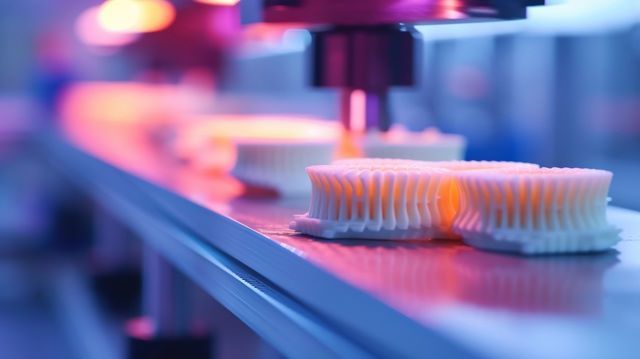
Additive manufacturing has a problem—it can’t keep up with the advances being made in conventional plastic feedstocks.
Conventional polymers are being enhanced with nanotechnology and nanoadditives to provide enhanced properties of strength, durability, thermal, magnetic, or electrical conductivity, scratch and chemical resistance, and even UV protection. But so far, many of these advantages are missing from 3D-printing as the raw materials used are incompatible with many nanotechnologies as they rely on highly viscous, pre-assembled block copolymer (BCP) inks, or specialized resins.
“Many polymer properties depend on tiny repeated domains that guide stress, heat, ions, molecules, or light through the material,” explains Michael Berger, founder of Nanowerk and an expert in nanomaterials. “Block copolymers can form those domains by self-assembly, but they need enough molecular motion to organize. In fast light-based printing, the printed part may have the right outer shape while its interior lacks the ordered pathways needed for advanced function.”
But now a team of material science researchers from the University of New South Wales has solved this problem with a new 3D printing strategy that enables highly ordered nanostructures to form during printing.
Typically, the rapid curing used in vat photopolymerisation traps polymers in disordered arrangements, preventing precise nanoscale control. But a new process, called Polymerization-Induced Arrangement of Nanostructures with Order-tunability or PIANO, solves this by using ethylene glycol to temporarily increase polymer mobility, allowing self-assembly into ordered structures (just 20–60 nanometres apart) even while the material is being printed.
After printing, the ethylene glycol helps create permanent crosslinks that lock the nanostructure in place. The breakthrough allows manufacturers to design materials with controlled properties at the nanoscale in a single printing process.
Moreover, the ethylene glycol functions as a latent crosslinker during post-printing annealing which boosts macroscopic mechanical strength.
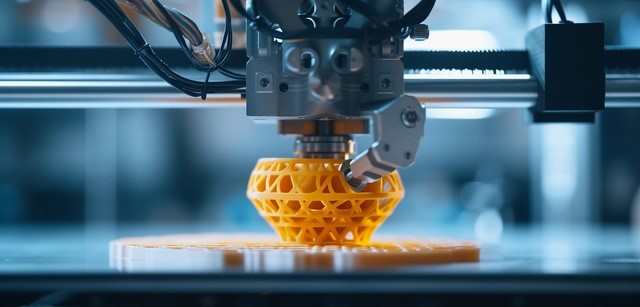
It is a breakthrough which provides polymer manufacturers with significant opportunities to increase value in their products through the inclusion of nanomatrials into feedstocks. Specifically, PIANO enables performance-engineered materials without adding complex post-processing steps.
Traditionally, creating polymers with ordered nanostructures requires lengthy thermal annealing, solvent treatments, or specialised manufacturing processes. These extra steps increase production time, energy consumption, costs, and quality-control challenges. PIANO allows nanoscale ordering to occur during the printing process itself, potentially reducing manufacturing complexity and improving throughput.
Key benefits include:
- Enhanced material performance – Ordered nanostructures can improve mechanical strength, toughness, barrier properties, optical behaviour, and chemical resistance.
- Greater product customisation – Manufacturers can tune nanoscale morphology and domain spacing through resin formulation, allowing materials to be tailored for specific applications.
- Reduced processing costs – Eliminating or minimising post-print annealing and solvent treatments can lower energy use and shorten production cycles.
- New product opportunities – The ability to combine complex 3D geometries with controlled nanoscale architecture could enable advanced membranes, sensors, electronics, medical devices, and high-performance industrial components.
- Scalable additive manufacturing – The approach is compatible with existing vat photopolymerisation systems, making adoption easier than with entirely new manufacturing platforms.
In essence, PIANO turns 3D printing from a method that simply shapes polymers into one that can also engineer their internal nanostructure, giving manufacturers a powerful new way to create differentiated, high-performance products. This could transform bulk production 3D printing by avoiding the traditional dependency on solvent-assisted processing or extended thermal annealing.
Furthermore, the research also highlights an important industrial trend: competitive advantage is increasingly shifting from basic polymer production toward formulation expertise and advanced materials engineering. Companies that understand how to integrate nanomaterials, conductive additives, responsive fillers, and programmable structures into scalable polymer systems will likely gain a major edge in higher-margin markets.
You can access the full study via the journal Advanced Materials.
To learn more about how nanotechnology can improve 3D printed polymers or epoxy resins, or coatings, or conventional plastics such as polycarbonate, or concrete, or rubber, or even gypsum board (drywall), then contact info@polymernanocentrum.cz or visit Polymer Nano Centrum.
Polymer Nano Centrum is a Czech nanotechnology company that specialises in improving polymers, plastics, resins and composites through nanotechnology. The company (which hosts this webpage) develops methods for incorporating carbon nanomaterials and other nanostructures into polymers to enhance properties such as conductivity, antistatic performance, strength, chemical resistance and thermal conductivity.