
Inside the Work of a Nanomaterial Researcher
Discover how Polymer Nano Centrum’s nanotechnology researchers are advancing polymer technology day after day.

A stronger component. A lighter polymer composite. A plastic that conducts electricity or withstands harsher operating conditions.
Long before these products reach the stores, they begin as a series of experiments and a scientific process that is repeated again and again until a solution emerges.
At Polymer Nano Centrum this work takes place every day. Where a team of scientists and technicians combine nanotechnology with polymer engineering to solve real manufacturing challenges. But what does a typical day actually look like for a nanomaterial researcher? Here is a look behind the scenes of a day in the life of Polymer Nano Centrum’s research team.
For researchers working with nanomaterials and advanced polymers, the day revolves around understanding customer needs. For example, a manufacturer has contacted Polymer Nano Centrum asking for an improvement to the raw materials used in one of their products. This could be a paint being made to be UV-resistant, a resin flooring which can disperse static electricity, or a polyurethane which is more durable and kills bacteria on contact. The team discusses how the nanoscale modification of these materials can change them to provide the required properties.
This means that no two days are exactly the same as research projects, customer requirements, and laboratory priorities are constantly changing, creating a working environment that combines scientific investigation with hands-on engineering.
It Starts with a Team
“My typical workday usually starts with a meeting with the scientific team and technical staff,” explains Michaela, one of Polymer Nano Centrum’s leading researchers. “We discuss what has already been done, which projects are currently in progress, and which tasks have the highest priority. Based on that, the work is divided among individual team members.”
These meetings help coordinate ongoing research and ensure that laboratory resources are focused on the most important projects. They also provide an opportunity for researchers to share findings, discuss challenges, and plan the next stages of development.
“What I enjoy most about my work is the teamwork,” adds Viktoriia, who has a PhD in nanoparticles and their application in polymers. “I have amazing and very knowledgeable colleagues who inspire me a lot. I also like the fact that everyone brings a different idea or perspective, and together we gradually create a scientific direction and an experimental plan.”
From Material Formulation to Laboratory Testing
Once priorities have been established, the practical work begins: testing production samples, preparing new material formulations, reviewing scientific literature, studying competing technologies, or setting up laboratory experiments. Central to this work is combining nanomaterials (measuring less than 10,000th the width of a human hair) with everyday polymers and resins to create better commercial products.
“We integrate nanomaterials into existing plastics," says Michaela, “looking for ways to improve their mechanical properties or to give materials properties that they originally do not have.”
The goal is not to develop technology for its own sake, but to address specific industrial needs, whether that means improving durability, increasing strength, reducing weight, enhancing conductivity, or introducing entirely new functional characteristics.
“I like that the development of such materials is related to demand in the market and the result of the work has an almost instant application,” notes Viktoriia, who has been working in the field of nanotechnology since 2018, when she worked at the Academy of Sciences in Prague in the Department of Polymer Nanoparticles.
Inside the Laboratory
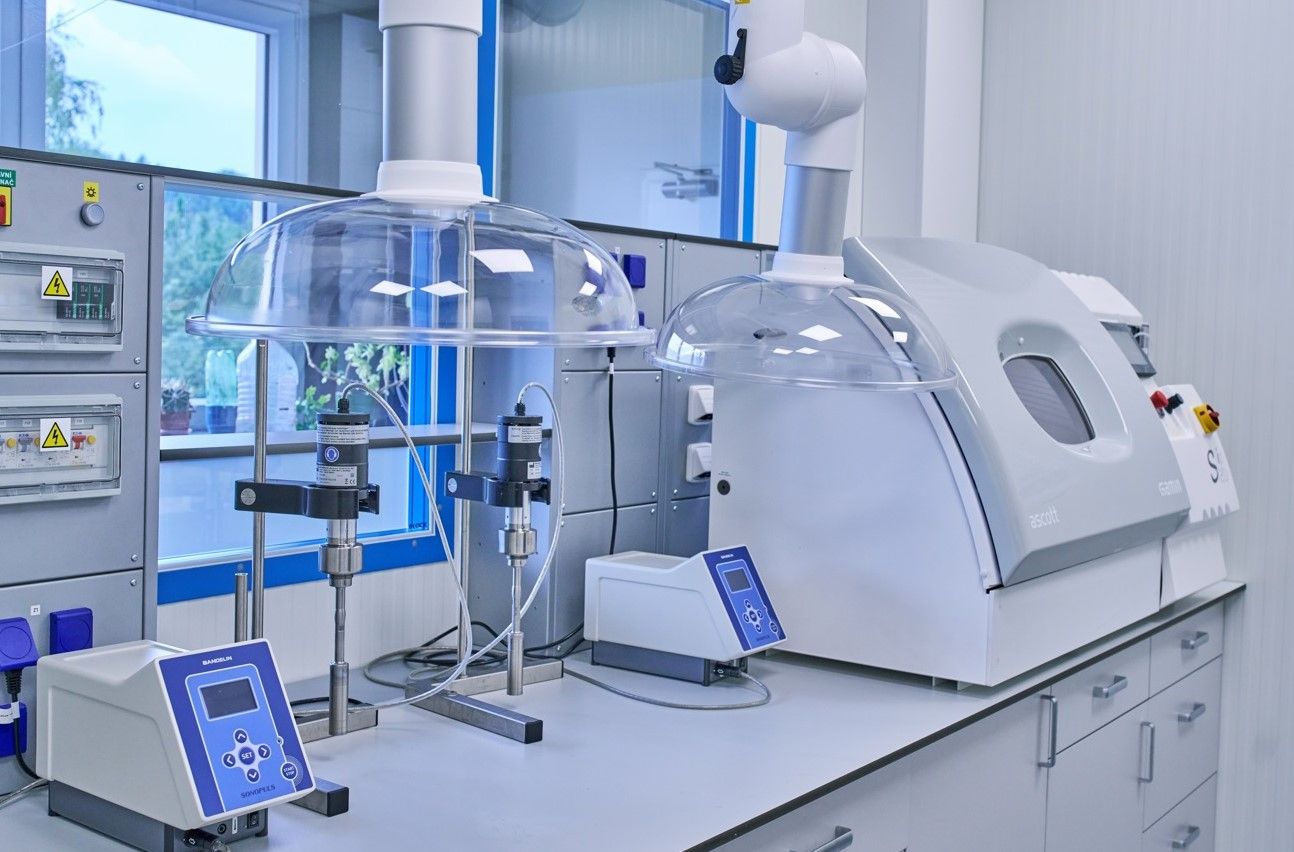
Laboratory experiments occupy a large portion of many working days, as researchers perform a wide range of mechanical and analytical tests to understand how modifications affect material performance. These tests help determine whether a formulation is moving in the right direction or whether further adjustments are required.
Among the most common activities are the following:
- Tensile testing, Charpy impact testing, and tensile-impact testing to evaluate strength, toughness, stiffness, and resistance to stress.
- FTIR and Raman spectroscopy to study chemical structures and material interactions.
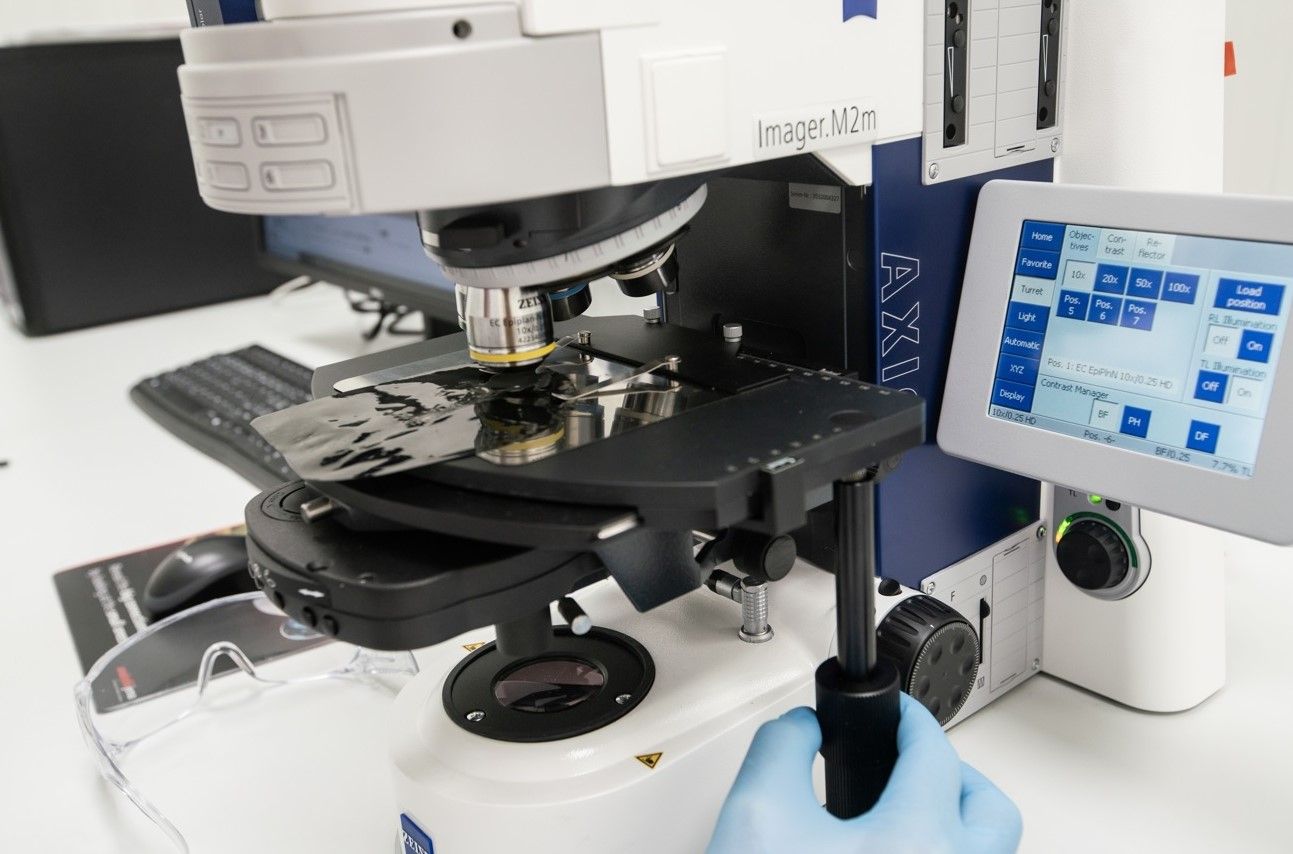
- Optical microscopy to examine morphology and surface characteristics.
- PVT, MFI, and TMA measurements to assess processing behaviour, flow properties, thermal performance, and dimensional stability.
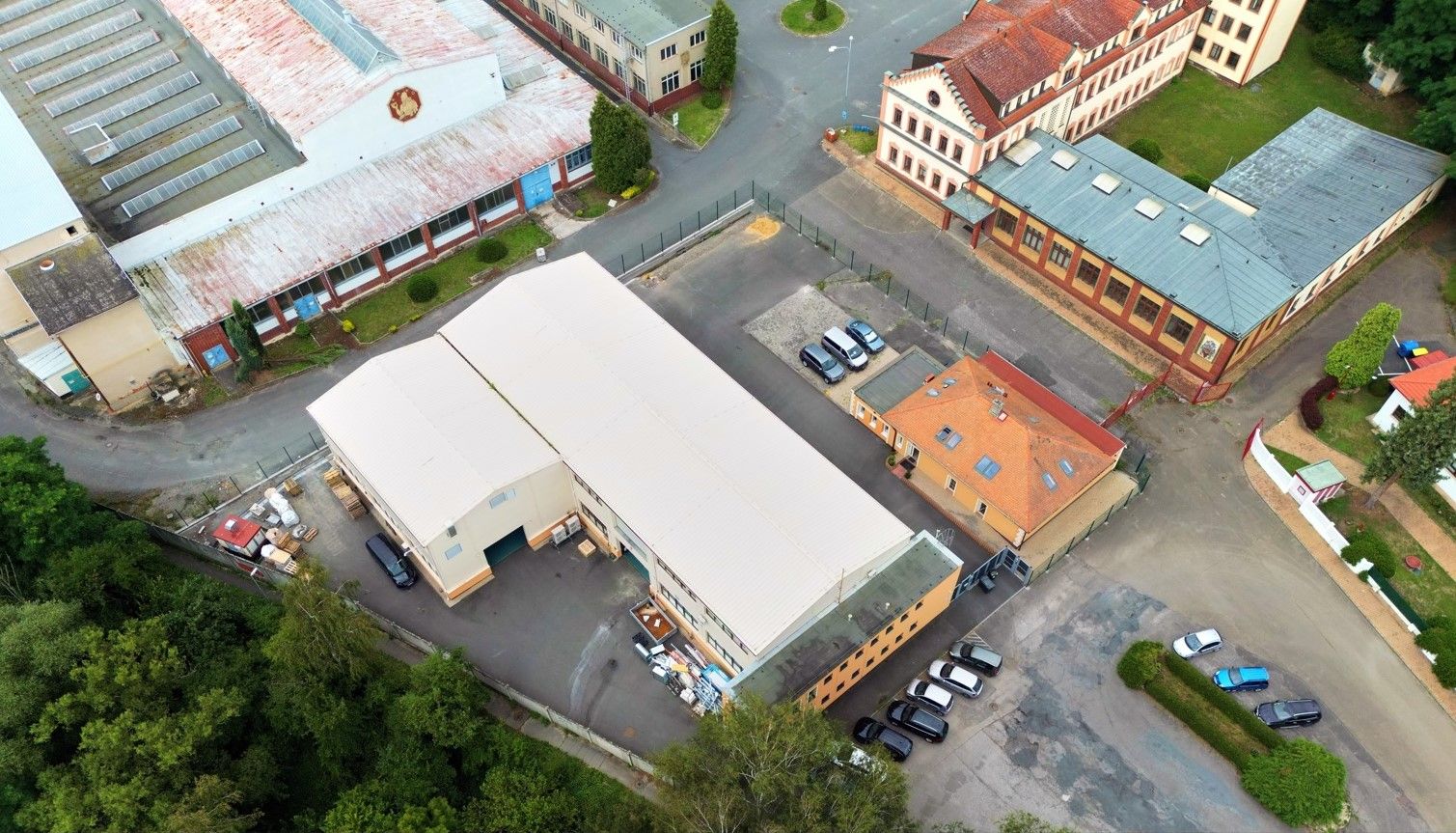
Modern material development generates a constant stream of samples requiring specialist tools as well as the know-how to understand the results. Fortunately, Polymer Nano Centrum has built its own state-of-the-art research facility just outside Prague.
“We have a well-equipped laboratory,” says Viktoriia, “and usually many samples waiting to be tested.”
The Science Behind the Data
But the testing itself is only part of the process, as once complete, researchers spend significant time analysing the results.
“After the measurements, I process and evaluate the results, compare them with previous data and write conclusions,” explains Michaela. “I try to understand whether the material properties have changed, what trend we can observe, and what the results mean for the project.”
This stage often determines the direction of future experiments. “We compare results, look for trends, evaluate how material properties change after modification, and prepare conclusions for further development,” Michaela adds.
Improving Materials One Step at a Time
“In material engineering, the development process is very repetitive,” observes Michaela. “You adjust the formulation, change the percentage of additives or fillers, test the material again, evaluate the results, and then continue improving it step by step.”
Researchers often spend weeks or months refining formulations, where small changes can have a significant effect on final performance. While the process can be demanding, it is also one of the most rewarding aspects of the profession.
“It is not always a fast process, and it can sometimes be quite time-consuming,” Michaela says. “But I personally enjoy this combination of practical testing, problem-solving and scientific thinking.”
Each round of experimentation brings the Polymer Nano Centrum team closer to a material that performs better and better until it finally meets the customer’s requirements.
From the Laboratory to Real-World Products
However, the most important and most satisfying aspect of nanomaterial research is seeing the laboratory work translate into practical results.
“We work on materials that can eventually be used in real products and industrial applications,” says Michaela. “For me, it is very motivating to see how laboratory testing, data analysis and teamwork can gradually lead to better, more durable or more advanced polymer materials.”
Photo credit: Vecteezy, Vecteezy, Polymer Nano Centrum, Polymer Nano Centrum, & Polymer Nano Centrum