
The Nanotechnology Boom Hidden In Plain Sight
How nanotechnology has become an industrial feedstock for everyday products used by millions.

For years, nanotechnology has been associated with futuristic materials, cutting-edge laboratories, and highly specialised industrial applications. The assumption has usually been that such an eleborate technology must also be very expensive and is therefore suitable only for highly advanced products, such as premium specifications for military hardware or pharmaceutical products.
It was also thought that consumers would take time to trust something that is invisible to the naked eye.
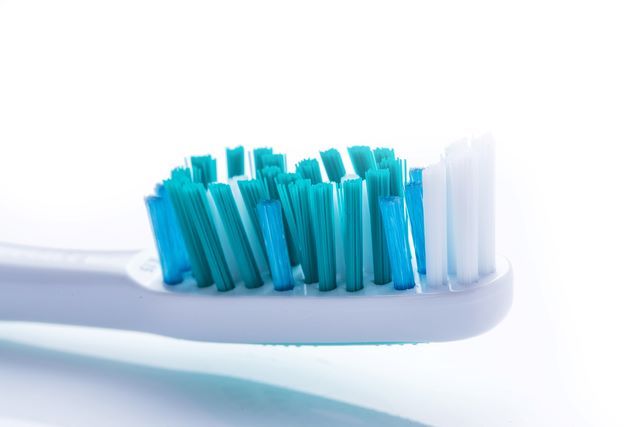
Both these assumptions now look increasingly outdated following news that a single design of a graphene-enhanced toothbrush has already sold more than 10 million units worldwide.
Thanks to the antibacterial properties the graphene has added, one of the most ordinary household products has now become one of the clearest examples of mainstream nanotechnology adoption. Customers, it seems, do not appear to mind in the slightest that nanomaterials are being used by manufacturers.
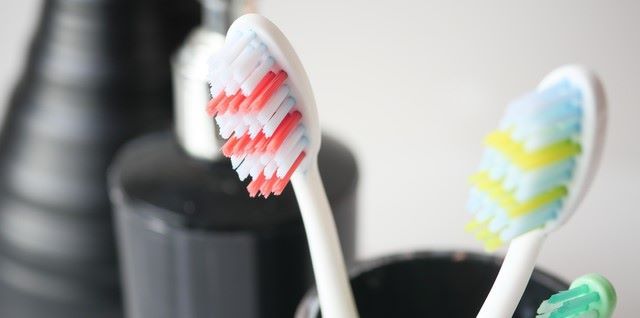
More importantly than the toothbrush itself, is the suggestions that nanomaterials are no longer viewed as exotic technology reserved for aerospace components or advanced electronics. Instead, they are steadily becoming part of normal commercial product development, even in low-cost consumer goods which people use multiple times every day.
Why The Toothbrush Example Is So Important
A toothbrush is not a luxury product; it is one of the most basic consumer items imaginable. Which is precisely why the graphene toothbrush story is so significant for the polymer and manufacturing sectors.
If nanotechnology can successfully enter a low-margin, mass-market product category like oral hygiene, it demonstrates that nanoadditives are moving beyond experimental materials and into large-scale commercial reality. Manufacturers are no longer asking whether nanomaterials can work or sell; they are asking where they can create value.

The success of these products also reveals something important about consumer behaviour. People are perfectly willing to adopt nanotechnology when the benefits are easy to understand and directly connected to product performance. In the case of the toothbrush, improved hygiene, caused by nanomaterial design killing more bacteria, became the key selling point.
The Science Behind Graphene Toothbrushes
The recent research attracting attention comes from scientists at the Korea Advanced Institute of Science and Technology (KAIST), who have been studying how graphene oxide interacts with bacteria. Their findings help explain why graphene-enhanced toothbrushes have been so successful, as they have proven that graphene oxide can selectively damage bacterial cells while remaining comparatively safe for human tissue. Much of this behaviour comes from the oxygen-containing functional groups attached to the graphene surface, which influence how the material interacts with bacterial membranes.
In practical terms, this creates antimicrobial effects which can help reduce bacterial growth on toothbrush bristles.
“This study is an example of scientifically uncovering why graphene can selectively kill bacteria while remaining safe for the human body,” explains Prof. Sang Ouk Kim who led the research.
Related articles: Nanocomposite Polymer Creates Ultra-Thin Electromagnetic Shields or Lichen-Inspired Nanocoating Delays Ice Formation
But what makes this especially interesting for manufacturers is that the performance improvement does not require completely reinventing the company’s previous toothbrush design or raw material inputs. Instead, relatively small nano-scale modifications were used to significantly change how the conventional polymer behaves, with real commercial advantages.

It is an application of nanotechnology that does more than just improve oral health. As Prof. Kim adds, “By utilizing this principle, we can expand beyond safe clothing without harsh chemicals to an infinite range of applications, including wearable devices and medical textile systems.”
That principle sits at the heart of many nanotechnology applications across the polymer industry today and is increasingly part of a much larger trend.
Nanomaterials are appearing in ordinary consumer and industrial products, often without attracting much public attention. For example, nano-enhanced polymers are being used in the following:
- Antimicrobial textiles, where nanoparticles can help reduce bacterial growth, odours, and staining while improving fabric durability.
- Food packaging, where nano-engineered barrier layers help slow oxygen and moisture penetration, extending shelf life and reducing food waste.
- Sports equipment, where nanomaterials improve strength-to-weight ratios, allowing products like bicycles, tennis rackets, helmets, and protective gear to become lighter and stronger without sacrificing durability.
- Electronics housings, where nanotechnology can improve thermal management, flame resistance, electrical shielding, and structural strength.
- Coatings, where nanoparticles enhance scratch resistance, corrosion protection, self-cleaning behaviour, and long-term surface durability even on common household surfaces.
- Filtration systems, where nano-scale structures improve the capture of fine contaminants, bacteria, and pollutants, even in standard air conditioning units.
- Automotive materials, where nano-enhanced polymers help reduce vehicle weight while improving heat resistance, mechanical strength, durability, and fuel efficiency.
In many cases, consumers may already be interacting with nanotechnology every day without even realising it.
Part of the reason for this is that the technology itself is becoming less visible, with manufacturers no longer marketing products simply because they contain nanomaterials. Instead of focusing on the nanotechnology, they are promoting the practical advantages that the nanotechnology brings, whether that means improved durability, better hygiene, lower weight, or stronger performance.

For decades, the assumption was that consumers might view nano-engineered products with suspicion simply because the technology sounded unfamiliar or highly technical. Yet the market is increasingly telling a different story.
Consumers tend to care far more about whether a product works than whether it contains advanced material science. If a nano-enhanced polymer provides clear value, most buyers appear comfortable adopting it as part of normal daily life.
With millions of nano-additive toothbrushes already sold, polymer manufacturers across even the most mundane of industries should begin thinking about how their products can get a boost from nanotechnology.
About Polymer Nano Centrum
Polymer Nano Centrum is a Czech-based specialist in nanotechnology solutions for polymers and industrial materials. The company (which sponsors this webpage) helps manufacturers apply nanoadditives and advanced material technologies to improve polymer performance, functionality, and product value across a wide range of industrial applications.
To learn more about this support, contact info@polymernanocentrum.cz or visit Polymer Nano Centrum.
Photo credit: Vecteezy, Vecteezy, Vecteezy, Vecteezy, & Vecteezy responsible gambling at SportPesa Kenya