
Inside Polymer Nanocomposite Production
Watch how polymer nanocomposites are made and find out why they are so important to modern manufacturing.

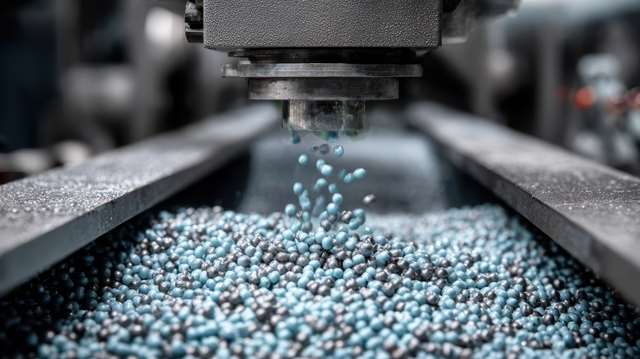
Nanotechnology in polymers often sounds like an abstract concept. Yet while the terminology of graphene, nanotubes, and nano-oxides and the like may be familiar to anyone working with advanced materials, the real question for manufacturers is simple: how do these nanoparticles actually end up inside a usable polymer material?
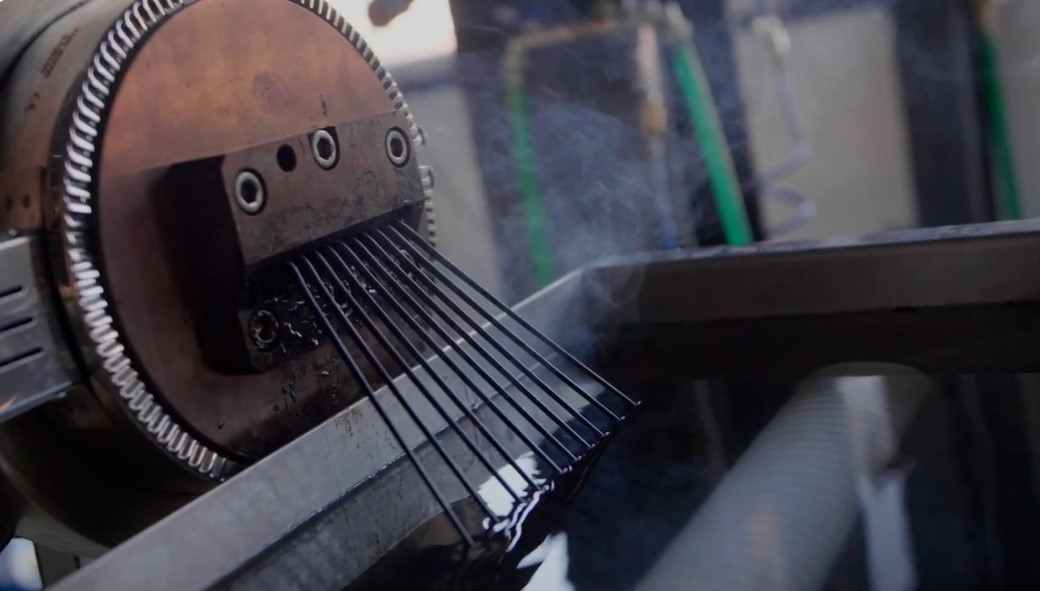
Now a video released by nanotechnology specialists at POLYMER NANO CENTRUM has given a rare look at the practical side of the process. It shows how polymer nanocomposites are produced by combining a base polymer with nanoscale additives and dispersing them into a uniform material ready for industrial use.
Watch the video here: https://www.youtube.com/watch?v=4Sz4MrE_D70
Watching the process makes one thing clear: successful nanocomposites are not just about the additives themselves. They depend just as much on how those additives are incorporated into a polymer matrix.
For those curious enough, here are four key steps to making a polymer nanocomposite:
1. Choose and Prepare the Polymer Matrix
The structural backbone of any polymer nanocomposite is naturally the polymer itself. Typically, the base is either a thermoplastic (for use in extrusion or injection moulding) or a resin system (designed for coatings or composites).
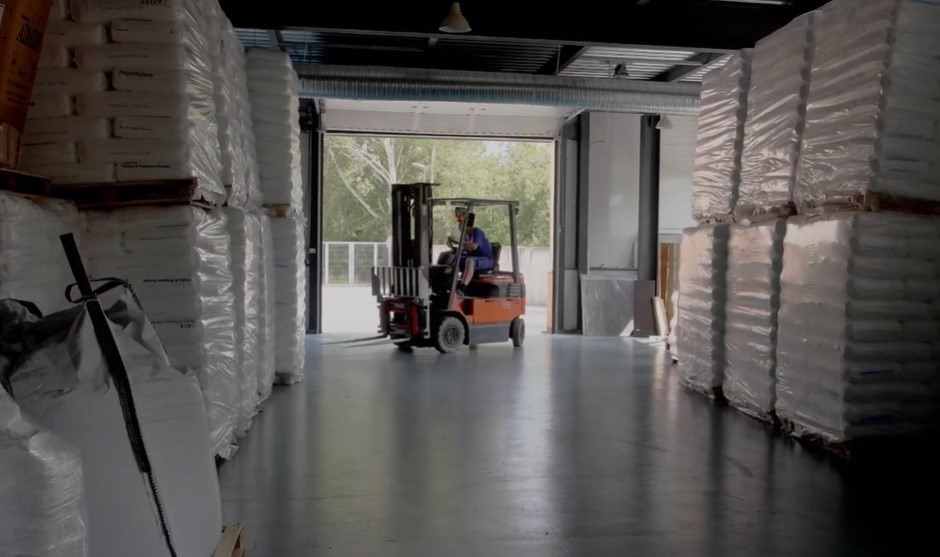
Compatibility between the polymer and the nano-additive is critical, as even highly advanced nanoparticles cannot deliver their full performance if the surrounding matrix cannot support uniform distribution.
2. Add Nanomaterials
The next step is the introduction of nanoscale additives. These may include materials such as carbon nanotubes, graphene structures, nanoclays, or metal oxide particles.
What makes nanomaterials remarkable is how little is required, as many formulations use only a fraction of a percent by weight. For example, as little as 0.1% weight of nanomaterial in a polymer can significantly change its behaviour.
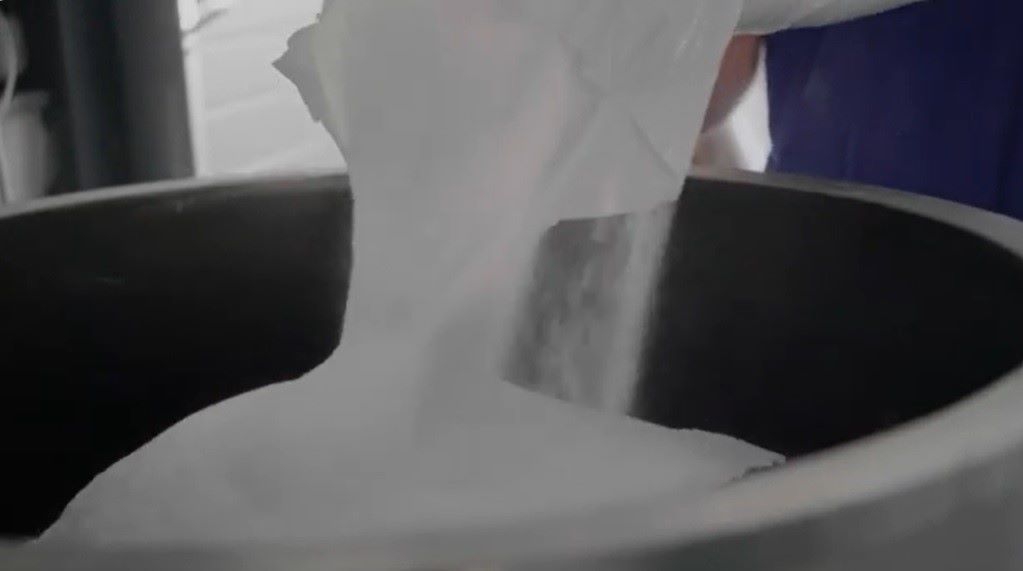
This key factor is why nanocomposites are attracting growing interest from industry, as instead of redesigning an entire polymer product, manufacturers can often achieve meaningful improvements with carefully selected nano-additives.
3. The Critical Step of Dispersion
Once the additives are introduced, the important stage of dispersion begins.
Particular care should be taken here, as nanoparticles naturally tend to clump together, forming agglomerates that behave more like conventional fillers than nanoscale modifiers. For this reason, breaking clusters apart and distributing the particles evenly throughout the polymer is essential.
Mechanical processing equipment, such as compounders, extruders, or high-shear mixers, are commonly used to achieve this dispersion with the goal of ensuring that the nanoparticles are evenly distributed across the entire polymer matrix.
Dispersion quality is important, as it allows the nanoparticles to interact effectively with the material at a microscopic level, which in turn determines whether a nanocomposite succeeds commercially or fails to deliver the expected performance.
4. Creating the Nanocomposite
Once the nanomaterials are properly dispersed, the result is a polymer nanocomposite – a material where nano-scale structures are embedded into the polymer.
At this stage, the material can be converted into pellets, granules, films, or other forms suitable for industrial processing. One of the advantages of polymer nanocomposites is that they can often be handled using standard polymer processing equipment, making them easier to integrate into existing manufacturing lines.
The real transformation is that the presence of well-distributed nanoparticles can change how a polymer behaves.
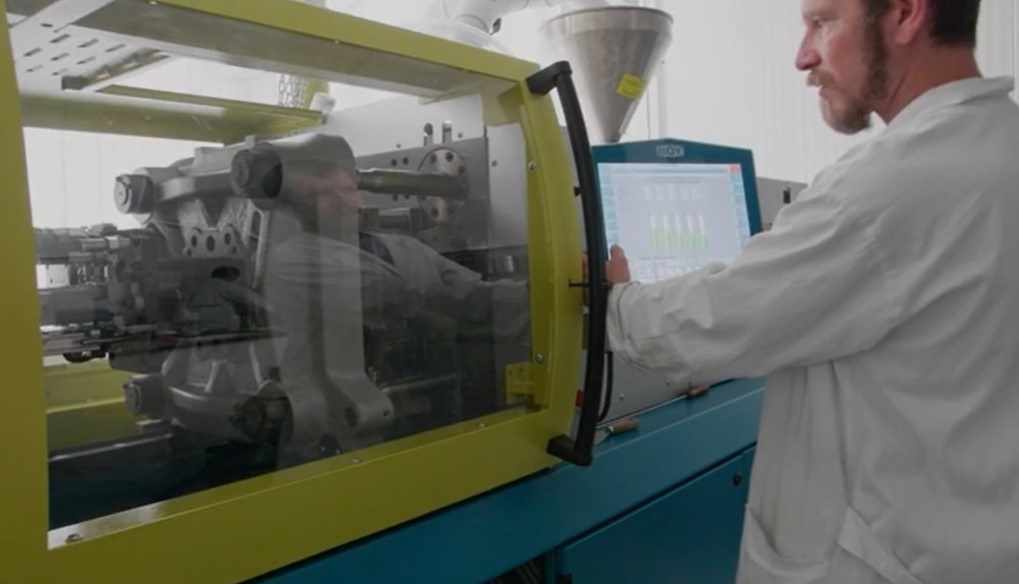
Potential improvements include greater mechanical strength, improved thermal stability, enhanced electrical conductivity, added UV resistance, bulk polymer feedstock reduction, electro-magnetic properties, thermal conductivity, static electricity dispersion, and better resistance to chemicals or environmental exposure. These changes open the door to new applications in sectors ranging from electronics and energy to automotive components and advanced coatings.
For companies developing or trading advanced materials, the real opportunity lies in understanding how functional improvements translate into commercial value. This is where specialised organisations, such as POLYMER NANO CENTRUM, play a key role. By combining theoretical expertise in nanomaterial science with practical experience in polymer processing and industrial production, their specialists (who helped create this video and webpage) help bridge the gap between laboratory innovation and real-world manufacturing.
By collaborating with experts who understand both the science and the industrial constraints, manufacturers are able to identify where nanomaterials genuinely add value and how to integrate them into scalable products and processes.
Polymer nanocomposites demonstrate how small changes at the nanoscale can produce significant differences in material performance. But achieving those improvements requires more than simply adding nanoparticles to a polymer—it requires mastering the process that integrates those particles into the material itself.
After watching the video, it becomes clear that nanotechnology in polymers is not just a scientific concept. Instead, it is a manufacturing process that transforms microscopic additives into practical materials for commercial advantage.
To learn more about the process of making nanocomposites and how they can improve the value of both common and specialist polymers, visit POLYMER NANO CENTRUM or contact info@polymernanocentrum.cz
Photo credit: Vecteezy & POLYMER NANO CENTUM