
Czechia—At the Heart of Europe and Nanomaterial Innovation
How a small country in Central Europe has become an industrial powerhouse for the application of nanotechnology in raw materials.


The Czech Republic is often viewed as a traditional industrial economy at the heart of Europe, known more for its tourism than for advanced materials innovation. But over the last two decades, Czechia has been positioning itself at the centre of European nanotechnology development and industrial application. Today, that investment and ambition is bearing fruit.
This new-found role has been created through a combination of internationally recognised discoveries, a dense concentration of nanotechnology infrastructure, and a growing number of companies translating nanoscale science into commercially viable industrial solutions.

Evidence of Czech nanotechnology research can be seen in the work of Markéta Hujerová from the Technical University of Liberec, whose research into nanofibre-based materials for medical applications earned recognition through the L’Oréal-UNESCO Pro Women in Science award. Her work focuses on nanofibre patches designed to reduce post-operative complications — a clear demonstration of how Czech nanoscience is addressing real-world challenges rather than remaining confined to laboratory settings.
Elsewhere, Czech research institutions in Brno and Prague have developed long-term expertise in nanofibres, polymer nanostructures, surface modification, and functional nanomaterials. The result is a steady pipeline of applied research with strong commercial relevance in healthcare, filtration, construction, textiles, electronics, coatings, plastics, and advanced manufacturing.
Czechia: A National Ecosystem Built for Nanotechnology
But what distinguishes Czech nanotechnology development is not just individual scientific achievement, but the supportive infrastructure the sector has made combined with its application in industry. A country where purpose-built research centres allow companies to collaborate directly with academic scientists, industrial engineers, and businesspeople. This allows companies to take competitive advantage which nanofibres, nanoparticles, nanosheets, and other nanotechnologies can provide as raw materials for the manufacturing sector.
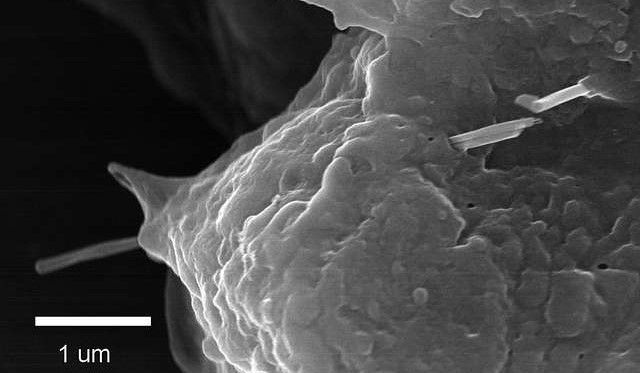
Take, for example, an event such as NanoCzech, a conference hosted in Liberec in northern Czechia, which brings together international experts from research institutions and the manufacturing sector with a clear emphasis on the practical application of nanotechnology. Rather than focusing solely on theory, the discussion centres on scalability, regulation, production costs, and industrial deployment — precisely the issues that determine whether nanotechnology and business succeed in the marketplace.
“Nanotechnologies can boost our economy and make the region more visible in the world,” says Martin Půta, Governor of the Liberec Region. “We want to show entrepreneurs and foreign partners that the Liberec Region is a place where we have been pushing the boundaries of this field for more than twenty years.”
This regular interaction between research and industry is one of Czechia’s competitive advantages. It reduces the gap between innovation and implementation, allowing new materials and processes to reach production lines faster.
Czech Industry: Where Science meets Manufacturing
One example of Czech nanotechnology combining with industry is in polymer-based applications, with companies such as POLYMER NANO CENTRUM illustrating how nanotechnology is being embedded into products at the design stage instead of being treated as an experimental add-on.

By working with polymer nanostructures, surface engineering, and nano-enhanced materials, POLYMER NANO CENTRUM(who sponsor this webpage) are addressing concrete industrial demands: improved mechanical performance, functional surfaces, conductivity, durability, and material efficiency of coatings, resins, and plastics. These capabilities are directly relevant to sectors such as automotive, aerospace, defence, electronics, and advanced manufacturing — sectors where Czechia already has a strong industrial base.
From a business perspective, the value lies not only in performance gains but also in competitive differentiation. Nano-enabled polymers allow manufacturers to reduce material usage, extend product lifetimes, and create features that are difficult for competitors to replicate quickly.
Why Czechia Stands Out for Nanotechnology Investment
Czechia’s growing role as a nanotechnology hub rests on a combination of factors that are particularly attractive to industry:
· A concentration of applied nanotechnology expertise linked closely to manufacturing.
· Strong technical universities with a tradition of industry collaboration.
· A skilled workforce experienced in polymers, materials science, chemistry, and engineering.
· Central European logistics and supply-chain accessibility.
· A stable democratic economy with a solid currency and pro-business government.
Together, these elements create an environment where nanotechnology can move efficiently from research to revenue.

Czechia’s position at the heart of Europe has long made it a crossroads for trade and industry. Today, that same position is being reinforced by its role in nanotechnology — not only as a place where research happens but also where nanotechnology is manufactured, applied, and commercialised.
As global industries look for materials that offer higher performance, sustainability and economic efficiency, Czechia is increasingly providing answers at the nanoscale. In that sense, the country is no longer just centrally located on the map — it is becoming central to how nanotechnology is applied in industry.
Related articles: Where Nanostructured Polymers are Advancing Industry or What is POLYMER NANO CENTRUM?
Photo credit: Dalibor Vilovski on Pexels, Picryl, Gencraft, & POLYMER NANO CENTRUM